A gorilla permit is your legal entry to one habituated gorilla family, for one hour, on one specific day. The Uganda Wildlife Authority (UWA) issues every permit, and because the number of families and the group size are fixed, permits are what decide your travel dates. Book the permit first and everything else follows.
This guide explains exactly what a permit covers, the different types, how allocation works, when to book, and the mistakes that cost travellers their dates.
What a gorilla permit covers
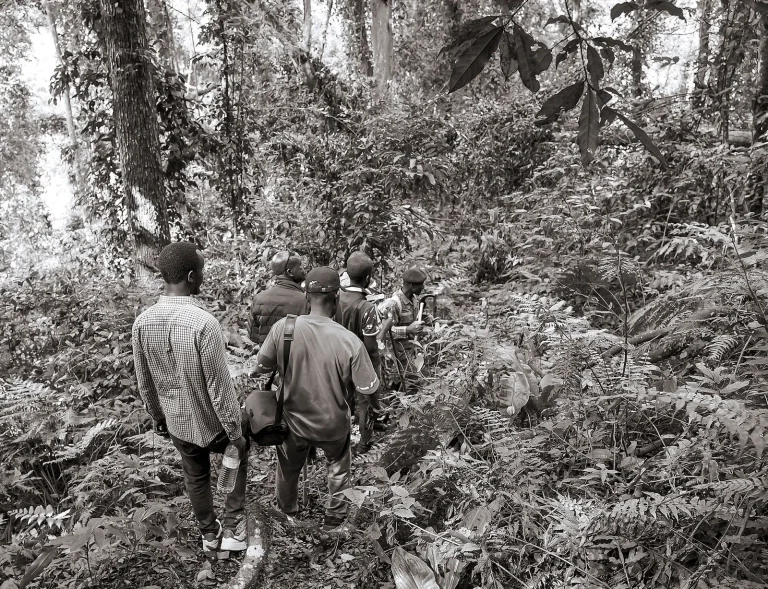
A trekking permit gives one named person the right to join one group of up to eight visitors to one gorilla family in one sector on one date. It includes park entry for that day and the services of the ranger-guides and trackers who find the gorillas and lead you there.
It does not include your accommodation, transport, meals, porter, or tips. Those are arranged separately, which is why a well-planned trip starts with a permit and then builds the lodge and driver around it. It also does not guarantee a particular family. Guides allocate people to families at the morning briefing based on fitness and group composition, and the family you are given can differ from the one you hoped for.
How your permit is registered
Permits are issued by the Uganda Wildlife Authority to a licensed tour operator, not sold directly to individual travellers. When we book your permit, we submit your name, passport number and nationality exactly as they appear in your passport, and rangers check these details against your passport at the park office before you are allowed into the forest. If a name is spelled differently or your passport is renewed after booking, tell us immediately so we can correct the record with UWA before your trek date. A permit booked for one traveller cannot be handed to someone else once it is issued.
Permit types
| Permit | Where | Time with gorillas | Group size |
|---|---|---|---|
| Standard gorilla trekking permit | Bwindi (all four sectors) and Mgahinga | 1 hour | Up to 8 |
| Gorilla Habituation Experience permit | Rushaga sector, Bwindi | Up to 4 hours | Up to 4 |
Current tariffs are set and published by UWA, and they differ by visitor category: foreign non-residents, foreign residents and East African citizens pay different rates. Tariffs are reviewed periodically, and UWA has at times offered reduced rates for the wetter months. We confirm the tariff that applies to you at the time of your quote rather than quoting a figure that may be out of date.
The Habituation Experience is a separate, higher-tier permit because it puts you with a family that is still being introduced to humans, for up to four hours instead of one. Only a small number are available each day, which makes early booking essential.
How allocation works: sectors, families and dates
Each of Bwindi's four sectors (Buhoma, Ruhija, Rushaga and Nkuringo) has its own set of habituated families, and each family can be visited by only one group of up to eight each day. That is a hard cap. If there are ten families in a sector, at most eighty visitors can trek there on a given day, however popular the date.
Availability therefore depends on three things: the date, the sector and the number of people in your party. A group of six will need six places in the same family, which narrows the choices. Splitting a group across two families is possible, but people who want to trek together should book together.
Mgahinga has a single habituated family, so its supply is very limited. That family occasionally crosses into neighbouring Rwanda or Congo for days at a time, and permits for those dates can be moved or refunded according to UWA rules. If Mgahinga matters to you, we suggest a flexible schedule and a fallback in Rushaga. Read more about the parks on our destinations page.
When to book
Permit demand follows the seasons. The dry months, June to September and December to February, fill first, and we advise booking four to six months ahead for those dates and as soon as possible for holiday weeks. During the wetter months of March to May and October to November, availability is easier, though Rushaga and Nkuringo still sell out on weekends. See our guide to the best time to go before fixing your dates.
A practical order of operations:
- Choose two or three possible date ranges and your group size.
- Ask us to check permit availability by sector.
- Once a date is confirmed, book lodging within the same sector, because lodges near the park offices are limited too.
- Only then buy international flights.
Booking flights before permits is the most common and most expensive mistake we see.
How we book your permit
Permits can be reserved through UWA or through a licensed tour operator. We handle the process for you:
- You tell us your dates, group size and preferred sector.
- We check availability with UWA and hold the permits.
- You pay a deposit, and we complete the booking using names and passport details exactly as they appear in your passports.
- We send the permit confirmation and a briefing before you travel.
Payment terms, deposit amounts and what happens if plans change are set out in our terms and conditions. Rules for changes and refunds ultimately follow UWA policy, and we explain them in plain language before you pay.
Changes, cancellations and illness
Permit conditions are set by UWA, and they can be strict. In general, permits are for a fixed date and changes are subject to UWA approval and time limits. That is another reason to confirm your international flights only after the permit is secured, and to consider travel insurance that covers cancellation.
Illness is a special case. If you wake up with a cough, a cold or a stomach problem, rangers may refuse you entry at the briefing to protect the gorillas. Tell your guide honestly, and ask us at booking about your options if this happens. It is much better to lose one permit than to pass on an infection to a family that has no immunity to human diseases.
Porters, guides and tips
A porter is not part of the permit, but we recommend one for every trekker. Porters are hired at the park office for a small fee, carry your bag and steady you on steep sections, and the income supports local families who live next to the park. You are also expected to tip your ranger-guide, trackers and porter at the end of the trek. We advise a fair amount in our trip briefing so you are not guessing at the moment.
How permit fees protect the forest
Permit income is not a tourism tax that disappears. It pays for the ranger patrols that remove snares, the trackers who monitor each family daily, and the veterinary response when a gorilla is injured or sick. A share of park revenue is also passed to the communities that live around the park under UWA's revenue-sharing programme, and that money has funded schools, clinics and water projects near Bwindi and Mgahinga.
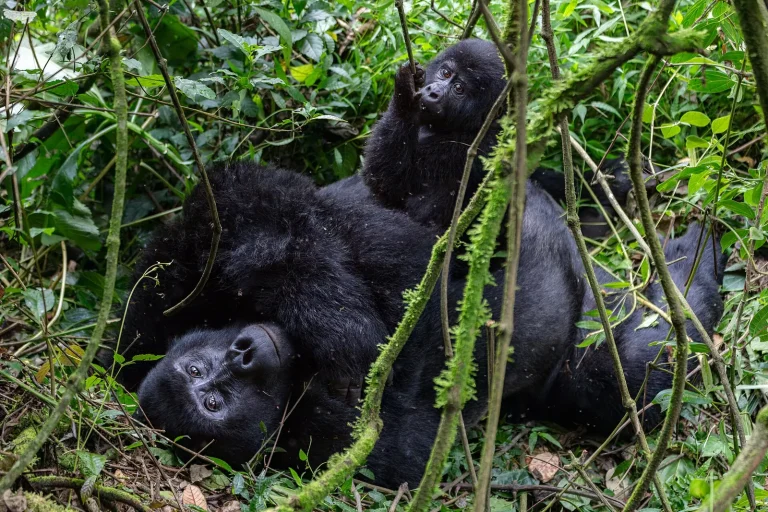
The link between tourism and protection is direct. Families that are visited every day are also watched every day, so illness, injury and poaching threats are noticed within hours instead of weeks. This is one reason mountain gorilla numbers have grown while those of most other great apes have fallen. When you buy a permit you are paying for that daily attention as well as your own hour.
Uganda and Rwanda permits are separate
Rwanda's gorilla permits are issued by the Rwanda Development Board, not UWA, and they cannot be swapped between countries. Some itineraries combine both, especially those starting in Kigali, and we can arrange permits on each side. Just remember that two sets of rules apply, and that each country's permits must be booked separately.
What to bring to the park office
Every trekker needs the same short list, and forgetting one item can end a trip before it starts:
- Your original passport. Photocopies and photos on a phone are not accepted at most park offices, because rangers match the name and number to the permit.
- Your permit confirmation, printed or on your phone.
- Cash in small notes for porter fees and tips, since card machines are rare at trailheads.
- A face mask, which is required when you are close to the gorillas.
- Water, a packed lunch from your lodge and your camera. Everything else can stay in the vehicle.
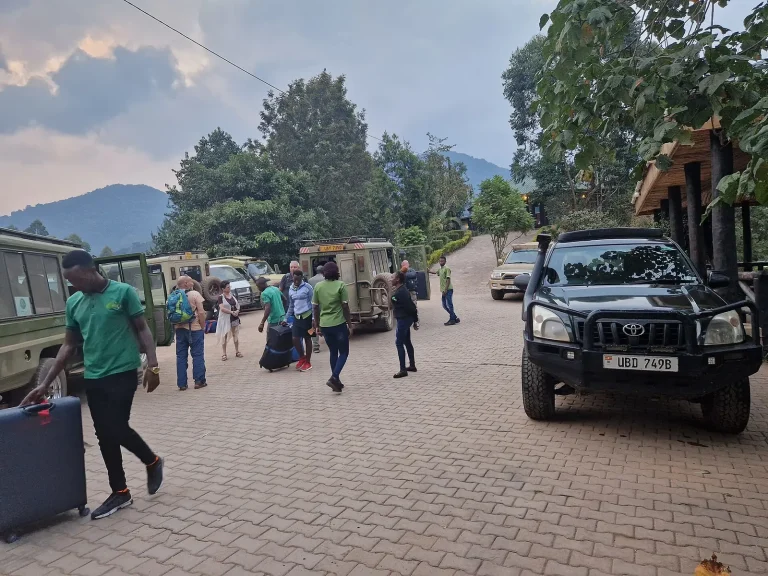
Briefings begin early, usually around 7:30, and late arrivals may be reallocated or turned away. Give yourself time to reach the park office, especially in sectors where the road from the lodge is rough or slow after rain.
Permits for groups, families and solo travellers
A single traveller can book one permit like anyone else, and will be placed in a group with other visitors on the day. Couples and friends who want to walk together should ask for the same family when booking, and larger groups should tell us early because the limit of eight in a family means a group of ten must split. For teenagers, remember that the minimum age is 15. Rangers may check dates of birth against passports, and there is no flexibility on this rule because the age limit is there to protect both children and gorillas.
If you have travelled with someone whose fitness or mobility is limited, mention it when booking. Sectors and families differ a lot, and a family that feeds near the trailhead is a very different day from one that has moved to the far side of a valley. We cannot control where the gorillas go, but we can steer you toward sectors with a better chance of gentler terrain.
Common mistakes to avoid
- Buying flights before the permit is confirmed.
- Booking a lodge in the wrong sector, which leaves you with a long early-morning drive to the park office.
- Spelling a name differently from the passport.
- Assuming a permit can be transferred to another traveller.
- Arriving on the morning of the trek. Arrive the afternoon before, since briefings start early and cannot be delayed.
- Trekking while unwell and hoping nobody will notice.
To see how permits fit into a complete trip, look at our sample 3-day Bwindi trek or browse all itineraries. For the wider picture of how a trek runs, read gorilla trekking in Uganda.
Check permit availability
Send us your date ranges and group size. We check every sector and reply within one working day.
Check my dates