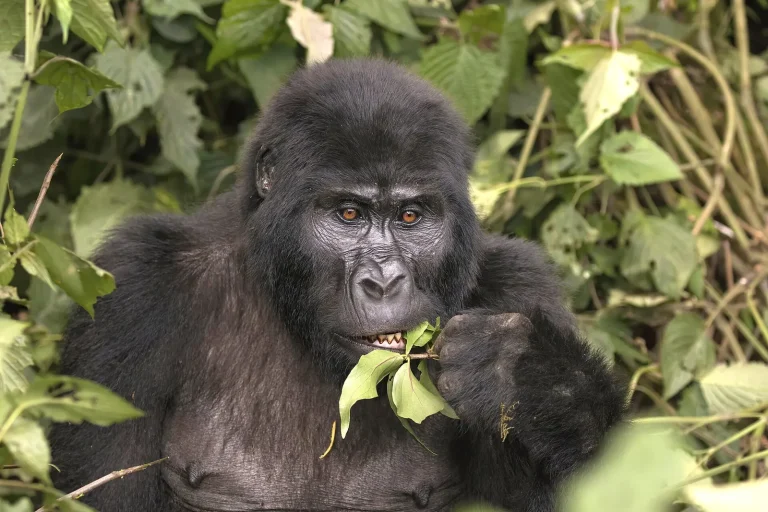
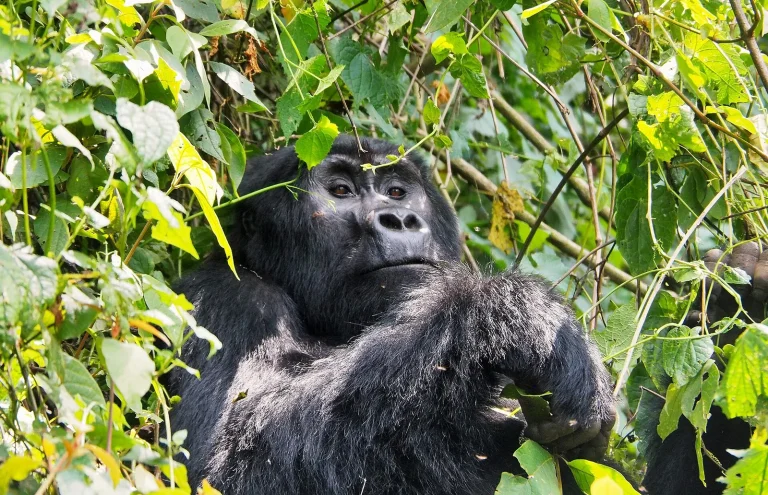
Habituation is the slow process of teaching a wild gorilla family to accept human presence. On the Gorilla Habituation Experience you join the trackers and researchers who do that work and stay with the family for up to four hours, instead of the single hour of a standard trek. It is the most immersive way to see mountain gorillas in Uganda.
This page explains what habituation is, how the experience differs from a normal trek, who it suits, and what to prepare for.
What habituation actually means
A wild gorilla family will normally flee or act aggressively when humans approach. To make tourism and research possible, a team of trackers and researchers follows a chosen family every day for a long period, staying at a respectful distance at first and gradually moving closer. The gorillas learn that these quiet, predictable people are not a threat, and eventually they carry on feeding, resting and playing while people are nearby.
The process usually takes two to three years. It is slow because the risk of getting it wrong is real: a family pushed too fast can become stressed, split up or move away from its usual range. Even after a family is declared habituated for tourism, the same team keeps visiting daily so the animals stay accustomed to people and are watched for injury or illness.
How the Habituation Experience differs from a standard trek
A standard trek puts you with a fully habituated family for one hour. On the Habituation Experience, you join a family that is still in the final stages of that process, and you stay much longer. The practical differences are:
- Time. Up to four hours with the gorillas after you reach them, compared with one hour on a normal trek.
- Group size. No more than four visitors, compared with eight, which means a quieter, less crowded encounter.
- Team. You walk with the researchers and trackers who follow the family every day, and they explain what they are doing and what they notice.
- Behaviour. The gorillas are less used to people, so you are asked to stay calm, keep further back at first and follow the guide's instructions closely.
- Price and availability. It is a higher-tier permit with only a small number available each day, so it should be planned well in advance. See our permit guide for how permits work.
Where it takes place
The experience is currently offered in the Rushaga sector in the south of Bwindi Impenetrable Forest, which is also the sector with the largest number of habituated families. That means you can pair a Habituation Experience with a standard trek on another day without changing your base. Rushaga has a good range of lodges and is about four to five hours by road from Kigali or roughly eight hours from Kampala. Read the full sector overview in our guide to Bwindi Impenetrable Forest.
What the day looks like
- Early start. You report to the Rushaga park office at first light for a briefing, usually earlier than a standard trek because the day is longer.
- Meeting the team. Guides introduce you to the trackers and researchers, explain the rules and outline how the family is likely to behave.
- Walking in. You follow the team to where the family spent the night. This can take under an hour or several hours through dense, steep forest.
- Time with the family. You spend up to four hours with the gorillas. Because the animals are still adjusting, guides may ask you to stay still or move slowly at times. You are likely to see feeding, grooming, play and how the family responds to the silverback.
- Walking out. You return to the trailhead in the afternoon, often tired but with a much fuller picture of gorilla family life than a single hour allows.
Standard trek and Habituation Experience compared
| Standard trek | Habituation Experience | |
|---|---|---|
| Time with gorillas | 1 hour | Up to 4 hours |
| Visitors per family | Up to 8 | Up to 4 |
| Family status | Fully habituated | Still being habituated |
| Who guides you | Ranger-guides and trackers | Trackers and researchers |
| Sectors | Buhoma, Ruhija, Rushaga, Nkuringo, Mgahinga | Rushaga only |
| Best for | First-time visitors | Photographers, repeat visitors |
A day in the life of a family being habituated
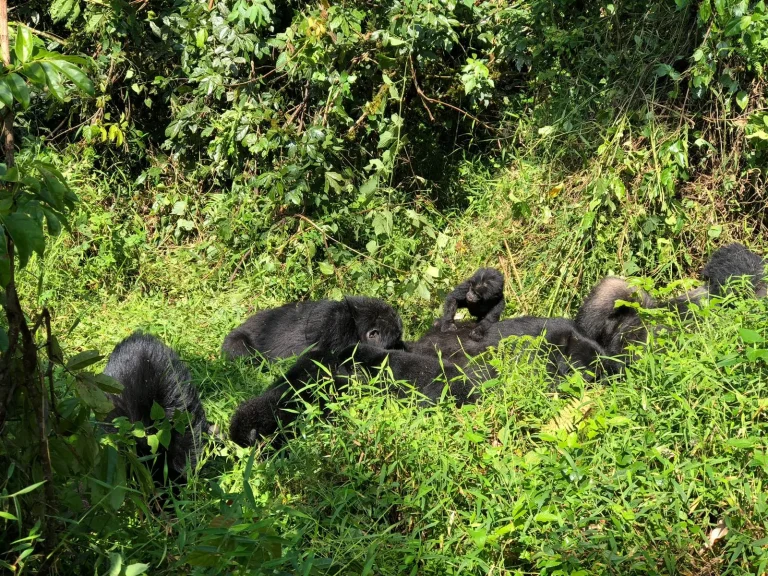
The daily rhythm of a gorilla family shapes what you see. Gorillas wake at first light, feed for the first part of the morning, rest through the warmest hours, then feed again before building fresh nests at dusk. A silverback and his females may spend the middle of the day dozing while infants climb over their relatives, and the calm periods are often when the family is most relaxed around visitors.
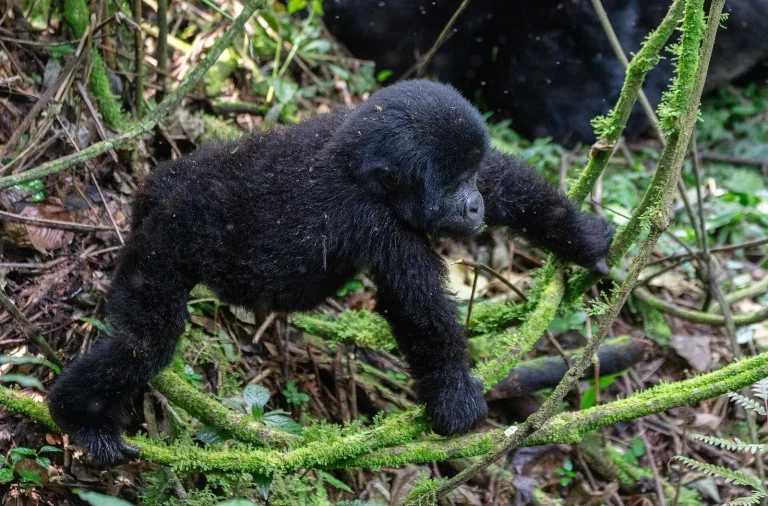
Because you are with the family for hours instead of one, you are likely to see more than one phase of that rhythm. You might watch the group move from a feeding site to a resting spot, see juveniles wrestle in the undergrowth, or notice how the silverback positions himself between the group and unfamiliar noises. Researchers on the team often point out details that a single hour would miss, such as who is grooming whom, how a mother responds to an inquisitive infant, or how the group reacts when another group's calls carry across the valley.
Doing it responsibly
Every visit to a wild animal has an effect, and the best experiences are those that keep that effect small. On the Habituation Experience, that means following the guide precisely, especially in the early minutes when the gorillas are assessing you. It means staying still when asked, keeping a calm voice, not reaching for a camera at the wrong moment, and never trying to touch an animal even if it comes close.
It also means choosing operators who support the system. Permits and guides should come through UWA and licensed partners, and the porters and community services you use should be paid fairly. We plan Habituation Experience trips so that fees, tips and lodge spending stay in the communities around the park as far as possible.
One more practical point: because the group is small and the day is long, the quality of your guide matters more than on a standard trek. Ask us who will lead your group, how many Habituation Experience days they have guided and what they do when a gorilla approaches unexpectedly. Good guides read the family's mood and decide when to hold position, when to back away and when to let an infant's curiosity run its course.
Who it suits best
The Habituation Experience appeals most to:
- Photographers. Four hours gives you time to wait for good light and behaviour, and to try different angles and lenses instead of rushing through an hour.
- Repeat visitors. If you have already done a standard trek, the longer encounter offers something new.
- Nature lovers who value depth. Time with researchers and the chance to see how a family reacts to visitors is closer to fieldwork than sightseeing.
It is not ideal for everyone. If you have limited mobility, or want a shorter and more predictable day, a standard trek is a better fit. The walk can be as long and demanding as a normal trek, and then you add up to four hours standing, sitting or crouching in the forest.
Fitness, health and behaviour
The same health rules apply as on a standard trek, and if anything they matter more. The family is less used to humans, and infections are a genuine risk. Do not trek with a cold, cough or stomach illness, and wear a mask near the gorillas. The seven-metre distance rule applies, but because gorillas may approach curiously, be ready to step back calmly.
Because you are there longer, comfort matters. Wear long trousers, gaiters, waterproof boots and layers, and carry enough water and a snack. A light rain jacket is essential in any season. Read our packing guide for a complete list.
How habituation supports conservation
Every habituated family requires a full-time team of trackers, rangers and researchers, plus veterinary oversight. The fee for the Habituation Experience helps fund that daily work, which in turn protects the family from snares, disease and disturbance. It also supports the long process of bringing new families into the tourism programme, which spreads visitor pressure across more groups instead of concentrating it on a few.
The wider story is one of the few conservation success stories of the past decades. Mountain gorillas were once at serious risk of extinction, and today numbers are slowly rising. You can read more about the animals in our guide to mountain gorillas.
Planning your Habituation Experience
- Book early. Only a few permits are available each day, and dry-season dates go first.
- Stay in Rushaga so you are close to the park office. Long drives at dawn tire you before a long day.
- Consider adding a standard trek on another day, so you experience both a short and a long encounter.
- Tell us your fitness level, because we choose the accommodation and schedule to give you enough rest between days.
For how a standard trek runs, see gorilla trekking in Uganda.
Only a few permits a day
Ask about availability before you choose lodge dates. We check Rushaga first and suggest alternatives if needed.
Enquire